
Cruising on the sailboat has been a plethora of wonderful new experiences intermixed with hard, uncomfortable and sometimes miserable moments. One of the most unpleasant things is the rolly anchorage. Before our island travels, we had no REAL concept of what a rolly anchorage meant. Its like; wait, I thought we were at anchor not rolling around on the high seas. What's happening here?
The time spent at White Cay were some of the worst nights ever. All because Bosco would not stop rolling.
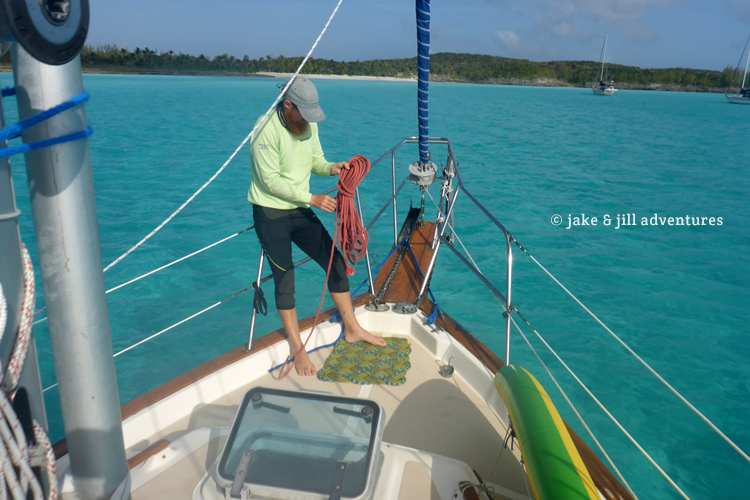
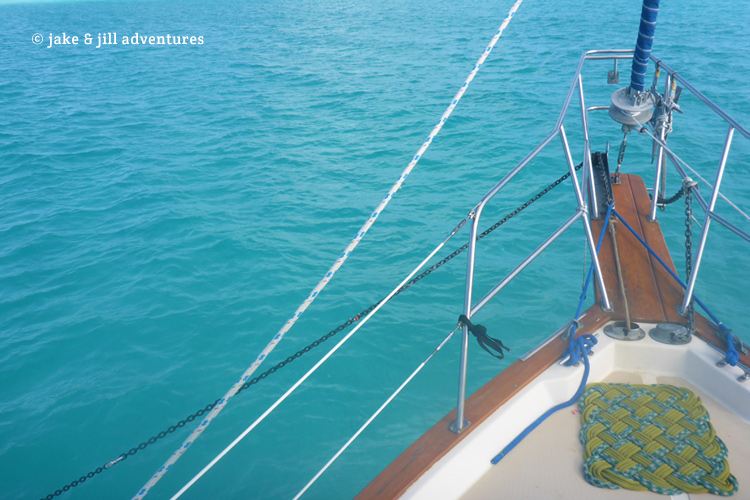
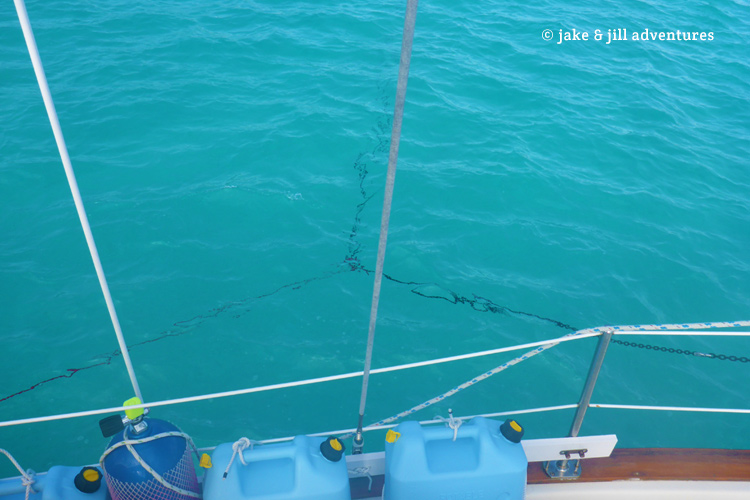
We knew about the Swell Bridle from research, but never put the the knowledge to action. Well we couldn't stand it any longer and decided from here on out, we will always use this technique in rolly anchorages (if conditions allow).
What is a Swell?
It helps to understand what a swell is, to understand the mechanics and use of a swell bridle. Swells are the waves that are generated by distant weather systems over a huge area of water - aka the open ocean. They have a long wavelength and are not affected by the immediate local wind/weather. The direction of the ocean swell doesn't necessarily line up with the direction of the wind right here and now.Islands interfere with the dynamics of the swell also. Things like Shoals, groundswells, reflection, refraction, trench effect, island effect, wrap around, etc. all change the nature of the swell. So depending on where you are, the swell will not always behave the way you think it should.
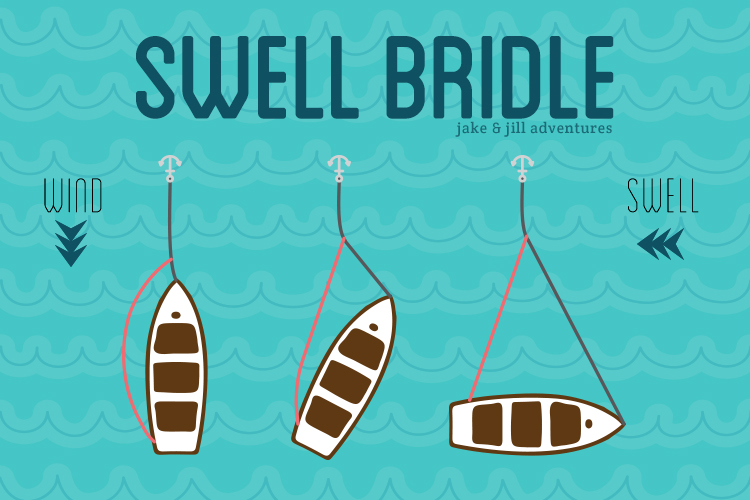
Why do we care? Because when anchored in the sailboat, the bow (or front) naturally wants to face the wind. For the most part, this is the most comfortable and natural position in terms of motion. When the ocean swell comes from a different direction than the wind, it causes the boat to rock and roll. But not the good kind. Get out the Dramamine if your prone to sea sickness!
When the swell and wind are around 45 degrees (or more) off from each other, the boat starts a rockin'. The swell bridle is a means to counteract the natural position of the boat from windward to swell-ward. Is that even a word? It doesn't stop the swell, but forces the boat to face it in a much more comfortable and manageable position. It will pitch up and down instead of rolling from side-to-side. Trust me when I say this is MUCH MUCH BETTER.
8 comments on “A Swell Time”