“Money.... That’s what I want,” ~ Flying Lizards
Let me start off by saying we are not money experts (ok..ok..yes I own my own business and Jake is a financial accountant so we aren't total novices). We are very average middle class couple who brings in a modest living. We aren't particularly thrifty nor are we crazy spenders. If we want something, we find a way to afford to get it. I like to think we're smart about our purchase choices.
The most common question we get is; How can you afford to do this? Well the truth is, its really not that terribly hard. We decided many years ago that this was our purpose and that we had to figure out a way to make it happen. So we did what we always do...we formulated a plan.
If you read our last post about becoming sailors, one huge part of that was reading tons and tons of books on this exact topic - the lifestyle of being a full-time live-aboard sailor. For one thing, it was a HUGE motivator but it also showed us that other people have had these exact same thoughts and have found a way to make it happen for them.
 One of the books that sticks out on the topic of money is a book called “Leap of Faith: Quit your job and live on a boat” By Ed Robinson. Many readers question his sense of humor (and honestly you need some level of maniac inside to do this sort of thing). But Ed has a few great chapters on what it takes to get the money you need, regardless of your income level. His details are far greater than mine but the general idea is as follows:
- Stop buying stuff
- Get on a budget
- Sell the stuff you do have
- Get by with less
Follow these rules and it won’t be long until you’re debt free and saving money
When Jake and I started this process, we weren't really in a situation of financial discomfort. We didn't have any debt but we didn't have much in the way of savings either. We had no property or assets of any kind either. We are your typical D.I.N.Ks (Dual income, no kids) and could get by more-or-less paycheck to paycheck saving a little bit here and there, while managing to keep the credit cards paid off at the end of every month. Jake earned a modest living as an accountant for a successful brokerage while I continue to run my own design business specializing in graphic / web / mobile app design.
I would even go as far to say that we were a bit careless with our money. Every trip was a YES and any item that would be used for one of our many hobbies was a YES; this became glaringly obvious when we decided to start a dirty rock-and-roll band and our own record label and home recording studio. We purchased A LOT of crap (though all of it went to use). However once we decided on the next life goal, we put a kibosh on spending!
Jake & Jill in The Firebird 4000 Project
Step 1 - Stop Buying Stuff
Step one was probably the most difficult for me at first. I have always been pretty carefree when it came to buying stuff, because I'm a girl and I LOVED TO SHOP. I never went overboard in the sense that I would spend more than I could afford, but I definitely didn't hesitate to buy that cute outfit that I desperately needed or some fun kitchen gadgets because I had to have them or that badass vintage guitar that I've been eyeing for months. Jake was much more modest about his purchases, other than hobby-related things. He didn't care about shopping as most guys don't, so a lot of it fell to me. I had to change my mentality of what I NEEDED vs. simply what I WANTED. I actually had to force myself to stop shopping for long periods of time (months), because it was much easier to resist the urge when you aren't face-to-face with it. That was the first step.
Step 2 - Get On A Budget
Living on a budget was not a foreign concept to either Jake or myself. When we first moved to Colorado in 2004, we had $2000 to our name and that was it. We had no job and had just paid first and last month's rent on a TINY one bedroom apartment to fit us and the dog (At least it had a gym). We scraped by for YEARS before we started to actually earn any amount of money to do things. On the opposite end of that spectrum, we had been living quite comfortably for several years and the budget sort of went by the wayside.
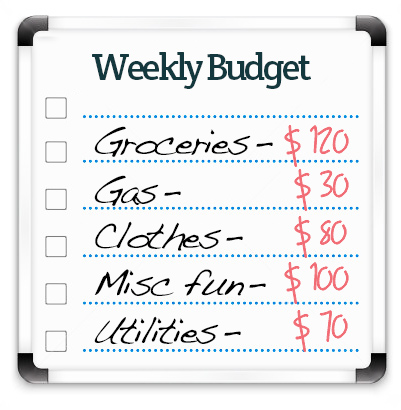 So we had to find a way to go back to that place, even though we didn't really HAVE to..we had to FORCE it. One of the best things we did to make this easier was the purchase of a magnetic white board on the refrigerator. Every dollar spent was written on THE BOARD. This was a very effective tool because it made us visually aware of what we were spending money on each month. After a couple of months, we had a good sense of the average and made the decision to immediately CUT 25% off the top of that number. This would be our new Monthly Spending Goal (MSG). Dividing that number (MSG) by 4 (I know the accountant at work here!!) gave us our first weekly budget. And for the next 4 years (2011-present) we slowly forced ourselves to spend less and less each week, while being painfully aware of every dollar we spent. The result was the making of a healthy savings account.
Step 2.5 - Buy a House
This step isn't on Ed Robinson's list, but I think its a really important one to consider. I realize that this sounds silly. WHY would one buy a house if they were planning on selling everything to sail off into the sunset? I'll tell you why. As a renter, we would throw around $20K / year away living in Boulder, Colorado. We did some research and found that we could actually own a home and have a mortgage / HOA payment that was LESS than that of paying rent each month. This is true almost everywhere. If you can manage to save some money for a down payment (even as low as 5-10K) then your money could be working for you instead of being thrown to someone else.
We also knew that a purchase in Boulder would be a very wise investment because the housing market here is so ridiculously strong it is near-recession-proof. This was a very important factor in determining where we should buy since we needed the investment to work for us. We bought the largest and cheapest place we could find, a mid-sized town home in North Boulder. We managed to save enough for a decent downpayment and a little leftover.
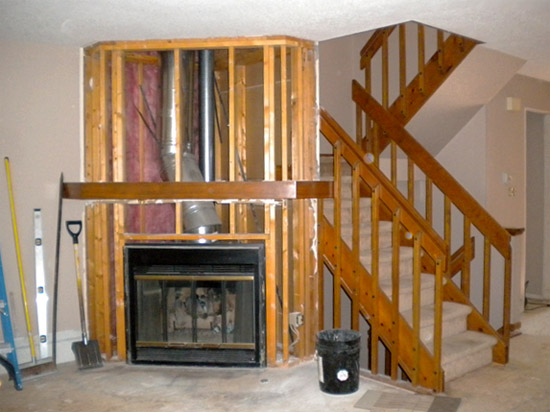
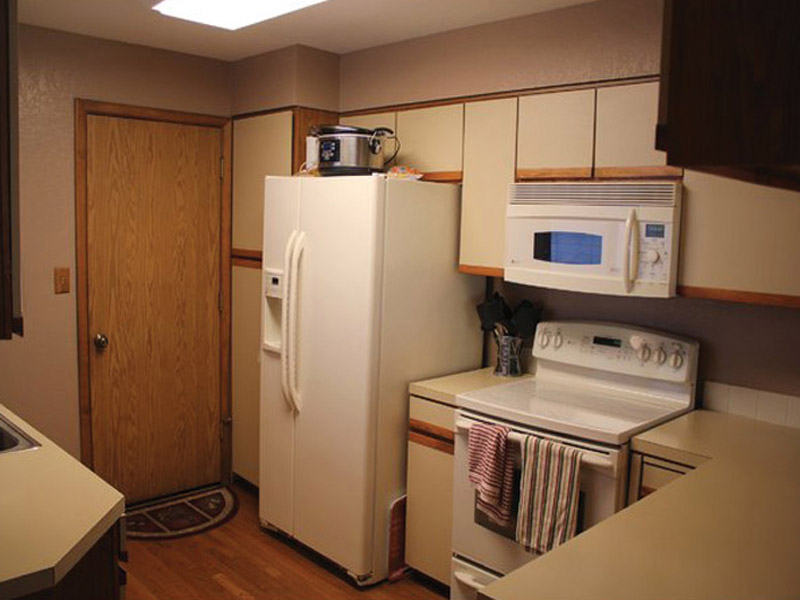
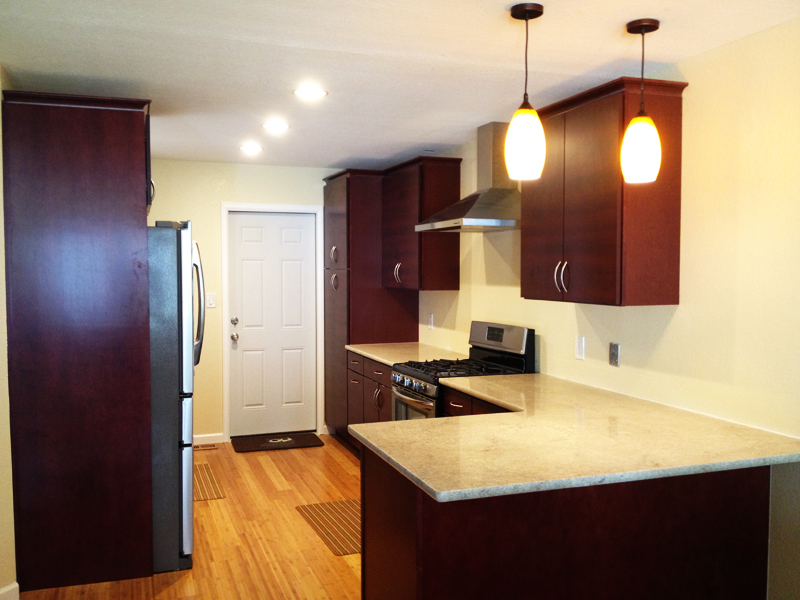
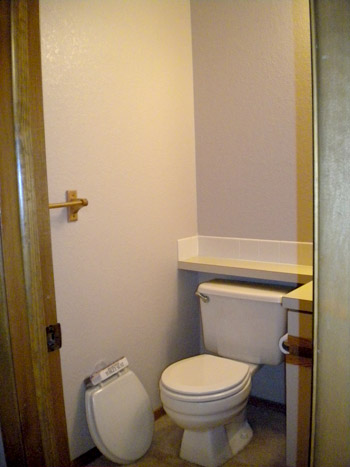
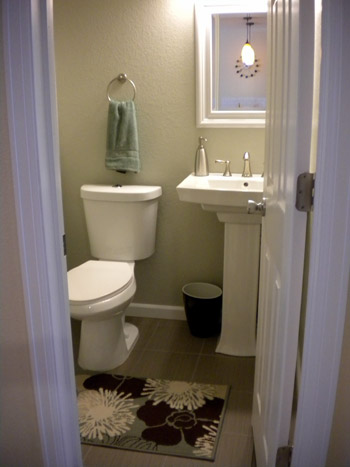
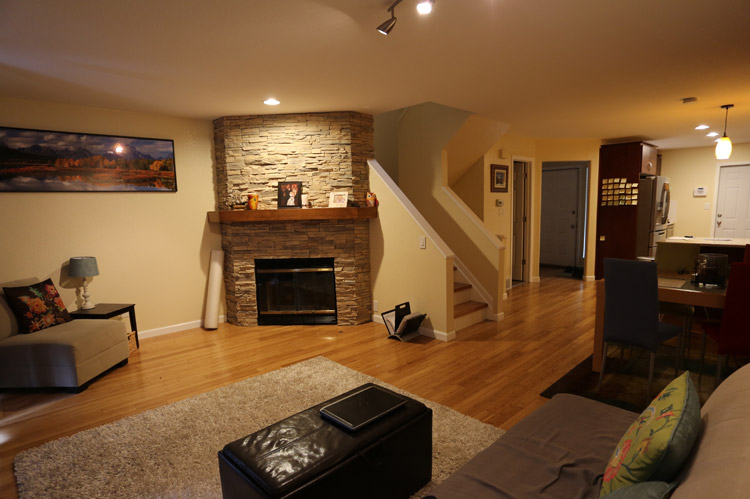
To take full advantage of the investment, we also did a full renovation and by that I mean we gutted every surface of the place; floors, ceiling, walls, railings, cabinets, EVERYTHING. The result was an amazing and beautiful (and unheard of in this town) home to live in AND the knowledge that we will get all this money back and more once we sell. We only bought the house to sell it, so it was designed and decorated accordingly. The unbelievable thing is that our mortgage was still several hundred dollars cheaper than our rent(s) ever were. We could put that money away each month and watch the savings account swell.
Step 3 - Sell the Stuff you do Have
Over time we managed to accumulate a lot of stuff. After moving from one apartment to the next, and then into a house, and then another house, we had accumulated even more than we realized. And even though we would be considered pretty minimal by many "American standards", we still had a lot of crap!
At first we would go through different areas of the house (closets or basement storage or book shelves or clothing drawers) and do some minor purging sessions. We would either donate the items to Goodwill or sell them on craigslist or give them to family/friends. Then we'd do it again a few months later, and get rid of even more stuff...sometimes even the nice stuff that you think you'd never want to part with. We'd sell our items and put all that money in the savings account for the trip - we wouldn't even spend it (well, not yet).
This was actually a wonderful process because every time we got rid of something it felt like a huge weight had been lifted.
Its funny how the things you own really do end up owning you.
It's kind of amazing how you forget about the things you have if you don't see them or use them on a regular basis. I would say that most people don't need 75% of the "crap" they have. And we were no exception to that!
Step 4 - Get By With Less
Because we were paying less each month (and our careers were taking off) we were able to save more and more. Keeping on a budget was more important than ever. We knew we’d have to become minimalists and decided that we should try to get used to it before we had no choice (I mean a 31' boat is a lot different than an 1800 SF home). We also felt that spending would have to significantly decrease, again just to get used to it because that will be our lives in a few short months. It was important that we started this transition so we could easily acclimate when the time comes.
So there you have it, in a nutshell. We followed a plan and managed to save save save. To add to this equation, some of the investments that Jake made in 2010 were sold which helped us attain the last bit of money needed to reach our goal: Buy the boat we want and afford to refit it. Selling the home should give us the money we need to travel for 2-3 years without working (too much!).